


























|
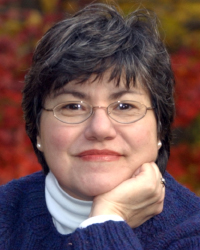
Mary Rosenblum
|
Hello all!
|
|
|
Welcome to our Professional
Connection interview.
|
|
|
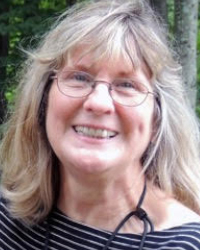
My guest tonight, Donna Ippolito,
is very exciting. Donna Ippolito has been writing, editing, and teaching
others to write for more than 20 years. From 1985 to 2001, she was
editor-in-chief at FASA Corporation, a Chicago publisher that packaged best-selling science fiction
and fantasy
|
|
|
novel lines for Penguin Books
and Time-Warner. These included the popular BattleTech, Shadowrun, Earthdawn,
and Vor series.
|
|
|
Prior to that, Ms. Ippolito was
an editor at the Swallow Press, a prestigious publisher of both literary
and commercial titles. Writers published by Swallow include celebrated
novelist Anaļs Nin; Jungian analyst Linda Leonard; futurist Robert Theobald;
Zen poet Lucien Stryk; and distinguished anthropologist W. Y. Evans-Wentz.
She also worked as a senior editor for Consumer Digest and was a founding
editor of Black Maria, a quarterly journal of women's writing. Today, she
is a freelance editor whose clients include Powersuasions, Inc., Ohio
University Press, Chicago Architecture Foundation, Publications
International, and the American Library Association.
|
|
|
Ms. Ippolito's own fiction and
articles include stories and reviews published in Sunday Clothes, East West
Journal, Small Press Review, Journal of the West, and others. She has been
listed in Contemporary Authors, Encyclopedia of Short Fiction Writers, and
Poets & Writers. Tonight we'll be talking about writing from the
perspective of someone who has spent time on 'both sides of the desk'.
|
|
|
So, Donna, after all that long
introduction, welcome!
|
|
|
Glad to have you here!
|
|
Donna Ippolito
|
Thanks, Mary. I'm delighted to
be here.
|
|
Mary Rosenblum
|
Shall we begin with the basics?
How did you get started writing, or did you begin as an editor?
|
|
Donna Ippolito
|
Well, I started writing from a
very young age...but I think
|
|
|
I really learned to write from
being an editor.
|
|
Mary Rosenblum
|
Why do you think that is?
|
|
Donna Ippolito
|
Because the real art of
writing is in the act of editing and revising.
|
|
|
We pour it all out in the
early drafts, but then the craft comes in.
|
|
Mary Rosenblum
|
I totally agree. J And
you've had some very nice publications with your writing.
|
|
Donna Ippolito
|
Yes, but my experience in
recent years has been much more as an editor.
|
|
|
Right now I'm trying to find
time to work on my book about dreams, but time is the hardest to find.
|
|
|
Regarding why editing helped
me learn to write, I'd like to add something.
|
|
|
By seeing the problems in
other people's writing
|
|
|
and having to work under
extremely tight deadlines
|
|
|
on very long projects it was a
trial by fire as well as a learning experience.
|
|
Mary Rosenblum
|
That's interesting. That's
about the same way that I feel I have learned from my teaching...without
quite the deadline pressure however!
|
|
Donna Ippolito
|
Well, yes, teaching is another
great learning experience
|
|
|
but the thing about editing
was that I had to have distance
|
|
|
in order to identify what was
wrong and how to fix it. That's not easy for a writer to do in the heat of
writing.
|
|
Mary Rosenblum
|
No kidding. Don't you find as a
writer that you have to consciously step back from your work in order to
gain that distance? It's hard for novice writers to do.
|
|
Donna Ippolito
|
Yes, you need to put the work
aside sometimes
|
|
|
but that's where editing has
been such a great help to me. I have an editor's eye all the time even with
my own work.
|
|
charie'
|
Do you have a technique that
helps you distance yourself to edit your own work?
|
|
Donna Ippolito
|
The techniques have to do with
knowing the functions of various aspects of each piece of writing.
|
|
|
For example, you've got to
grab your reader in those first couple of sentences.
|
|
|
When I was reading "the
slush pile" I never got further than that if something didn't catch my
attention.
|
|
|
That taught me a lot about one
important element of any piece of writing.
|
|
kolanda
|
How long should a novice writer
set something aside?
|
|
Donna Ippolito
|
There's no set time. Usually
you set something aside when you feel stuck
|
|
|
or when you've worked over and
over the same material so much that you can no longer really
"see" it.
|
|
kolanda
|
As an editor what was your main
pet peeve about submissions from writers?
|
|
Mary Rosenblum
|
And how does this relate to the
weakness you see in student manuscripts as a LR instructor?
|
|
Donna Ippolito
|
My pet peeve was receiving
material that was utterly wrong
|
|
|
for our publishing program. I
couldn't figure out why people didn't just do a bit of research.
|
|
Mary Rosenblum
|
I hear that from a LOT of editors!
|
|
Donna Ippolito
|
This relates to manuscripts
from LR students because they often don't have a clear sense of who the
reader is for a piece of writing.
|
|
|
You have to know who you're
writing for? How else will you know what to emphasize and what to leave
out?
|
|
reece
|
How do you meet deadlines while
distancing yourself from your work and how do you know when its been edited
enough?
|
|
Donna Ippolito
|
Well, this is where craft
comes into play. You must
|
|
|
develop your skills and
techniques so that you can rely on them
|
|
|
when you barely have time to
think.
|
|
|
As for knowing when something
is finished
|
|
|
I suggest that writers join or
form a writers group of like-minded souls to get
|
|
|
serious but constructive
feedback.
|
|
Mary Rosenblum
|
Do you think a novice writer
can be objective about his/her own work without some outside input?
|
|
Donna Ippolito
|
Again, I believe that craft is
the key word.
|
|
|
If you are working from
certain principles, you may be able to ask
|
|
|
yourself the right questions.
But you'll always want to get feedback
|
|
|
from your editor (if you get
published)
|
|
|
or other friendly readers (not
family and friends, usually).
|
|
niro1689
|
Do you think it's better to
complete a first draft before you start revision, or to revise as you work
through your draft?
|
|
Donna Ippolito
|
I think that varies with the
writer.
|
|
|
I do believe it's usually a
good idea to get as much
|
|
|
out on the page--for better or
worse--rather than to start editing
|
|
|
yourself in the midst of the
creative side of things.
|
|
|
Editing and revising are where
we refine the raw material.
|
|
|
That's why we call it
polishing.
|
|
Mary Rosenblum
|
I'm glad to hear you say that,
Donna -- that it is usually better to get that first draft down. I've
seen...
|
|
|
quite a few novice novelists
bog down in the middle of a book as they edit until they run out of
creative steam.
|
|
Donna Ippolito
|
Yes. The main thing is to have
a manuscript
|
|
|
that you can go back and edit.
If you edit and constrict the
|
|
|
creative flow you'll never
have that pile of pages
|
|
|
that you can dive back into.
|
|
Mary Rosenblum
|
Hear hear!
|
|
kolanda
|
Would it be good to pay for your
work to be edited in advance of sending it somewhere?
|
|
Donna Ippolito
|
I'd be very careful about
this.
|
|
|
The best thing is to learn the
skills and techniques that will
|
|
|
serve you in the genre you've
chosen.
|
|
|
I truly believe writing is a
craft like weaving.
|
|
Mary Rosenblum
|
(Which is why you're taking the
Long Ridge course, right? )
|
|
Donna Ippolito
|
The reason I wanted to teach
for Long Ridge
|
|
|
is that the materials will
teach someone EVERYTHING they need to know
|
|
|
if they will truly work
closely with the instruction manual.
|
|
Mary Rosenblum
|
I totally agree there.
|
|
Donna Ippolito
|
Writers have to read
voraciously as well.
|
|
|
I think that is one of the
best ways to learn to write...by imitating
|
|
|
the writers we admire and
studying their tricks.
|
|
Mary Rosenblum
|
Donna, I'd like to talk a bit
if we may about inspiration versus craft. I run into many novice writers --
especially in the speculative fiction universe-- who believe
|
|
|
that all you need is a good
idea and the writing simply doesn't matter. The idea trumps all.
|
|
Donna Ippolito
|
Excuse my bluntness, but that
makes no sense to me.
|
|
|
You've got to tell a good
story
|
|
|
and the only way to do that is
through tight plotting
|
|
|
and an understanding of how
plot and character interact in a chain reaction.
|
|
kolanda
|
How do you know you have a really
good story?
|
|
Donna Ippolito
|
You'll be excited about
writing it, of course
|
|
|
but that's where you also need
to test out your work
|
|
|
on readers in your own circle
or through Internet groups and such.
|
|
|
A good story is suspenseful. I
just read The Historian, and
|
|
|
I didn't even care if I
understood the plot half the time because the characters
|
|
|
were so fully realized and the
plot was so exciting.
|
|
Mary Rosenblum
|
Were you a purchasing editor,
Donna, or did you work on in-house projects?
|
|
Donna Ippolito
|
I was the acquisitions editor
at
|
|
|
two different publishing
houses and also at a magazine.
|
|
|
Is that what you mean?
|
|
Mary Rosenblum
|
Yes, thank you. J
So what was it
|
|
|
that made you say 'I want to
buy this story'?
|
|
Donna Ippolito
|
I'm sure everyone knows this
is subjective.
|
|
|
I had an assistant who usually
loved the manuscripts
|
|
|
that I hated, but I had
confidence in my own taste.
|
|
|
I can only say again that a
story has to grab you up and not let you go.
|
|
|
That's a good story--in any
genre and even in nonfiction.
|
|
Mary Rosenblum
|
And I do want to touch on
something you just said here -- this IS subjective. It's easy for a novice
|
|
|
writer to feel that one
editorial rejection means all editors will reject it. Which might be so. But
it might not either, right? If it's a good story.
|
|
Donna Ippolito
|
Absolutely, Mary. As we teach
|
|
|
in the course, rejection can
come for many reasons
|
|
|
as editors usually have very
specific themes or other criteria in mind.
|
|
|
A rejection might have nothing
to do with the quality of the writing.
|
|
niro1689
|
Which is better to expand on:
characters or plotline?
|
|
Donna Ippolito
|
As I mentioned, the two are
interrelated.
|
|
|
For me, character is always
the starting point;
|
|
|
what this person wants with
all her heart and soul
|
|
|
and what she's willing to do
in order to overcome the obstacle in her way.
|
|
|
One character will react
differently to the same events (plot elements)
|
|
|
than another character...
|
|
|
You have to know your
characters just like you'd know another person;
|
|
|
what they'd say, how far they
would go, what they're afraid of
|
|
|
what would make them overcome
their fear and so on.
|
|
|
Each action leads to a new
situation (plot element), which
|
|
|
will lead to new actions by
the character. I hope this makes sense.
|
|
Mary Rosenblum
|
It does to me. It seems utterly
sound.
|
|
grayalien
|
Do you think anyone can be
successful at writing fiction, or does it take a degree of "natural
aptitude"?
|
|
Donna Ippolito
|
Natural aptitude is simply the
starting point.
|
|
|
I believe that anyone can
learn the skills and techniques.
|
|
|
Not everyone can be
"great" but every person
|
|
|
with natural aptitude can
learn to be a good storyteller.
|
|
|
Most of the great writers were
"hack writers"
|
|
|
in the sense that they wrote
for weekly newspapers and for money.
|
|
|
Dickens wasn't sitting around
trying to write masterpieces. He was a working writer.
|
|
Mary Rosenblum
|
Thank you SO much for saying
that!
|
|
keslas
|
What's your advice on building
believable worlds in speculative fiction?
|
|
Donna Ippolito
|
It depends on your bent and
the type of reader you want to attract.
|
|
|
As long as you can make your
ideas credible on the page through
|
|
|
small details and technobabble
etc. it doesn't really
|
|
|
take that much to "create
a world".
|
|
|
Don't forget that the reader
is collaborating with you by filling in
|
|
|
a lot of the imagery and scene
through his or her imagination.
|
|
reece
|
If you receive a rejection
should you revise the manuscript before sending it out again or send it out
a few more times before revising it?
|
|
Donna Ippolito
|
If you haven't received any feedback,
I still suggest
|
|
|
getting comments from other
writers like yourself.
|
|
|
They may be able to help you
identify any spots
|
|
|
that might still need work,
but if
|
|
|
you're satisfied with the
story, I would persist.
|
|
Mary Rosenblum
|
And doesn't that tie back in to
what you said earlier about the reasons for rejection? That story might
|
|
|
simply have been rejected
because the editor had one in inventory like it, right? So revising it
might not be a good thing.
|
|
Donna Ippolito
|
That's right.
|
|
|
We have to believe in
ourselves
|
|
|
but that's where doing a
tremendous amount of reading comes in.
|
|
|
If you immerse yourself in the
kind of writing that you actually want to do
|
|
|
you'll gradually absorb a
sense for what works and what doesn't.
|
|
|
This really isn't a science,
though.
|
|
Mary Rosenblum
|
Is this a good reason for
novice novelists to write the type of book they like to read?
|
|
Donna Ippolito
|
Oh yes, Mary! You'll know
exactly what readers are looking for.
|
|
|
You'll know the kinds of
characters that are the most fun
|
|
|
the kinds of settings...the
kinds of situations you want to see characters
|
|
|
dealing with. I've had
students who say they
|
|
|
don't like to read, and I
don't believe they'll ever learn to write well
|
|
|
for that reason.
|
|
Mary Rosenblum
|
Oh, boy, that has sure been my
experience with novice writers and students!
|
|
kolanda
|
Can you have too many characters
at one time or in one area of your story?
|
|
Donna Ippolito
|
Definitely. A short story is
obviously
|
|
|
very different from a novel.
It covers only a brief period
|
|
|
and you can't clutter up the
plot with a lot of characters
|
|
|
simply because you probably
don't have the word count.
|
|
|
You're talking about a short
story, right?
|
|
Mary Rosenblum
|
What about in a novel?
|
|
Donna Ippolito
|
Well, a novel usually has
subplots, so
|
|
|
you'll need interesting
characters for that
|
|
|
but I think if you have too
many characters
|
|
|
you risk the reader getting
confused
|
|
|
and your main character will
get
|
|
|
too sidetracked from his
desperate struggle to
|
|
|
overcome some obstacle to his
burning desire...
|
|
|
a phrase that I use to
describe a plot.
|
|
niro1689
|
How do you know when you have
too many characters?
|
|
Donna Ippolito
|
Your main character has to
feel very real to you.
|
|
|
You're going to experience
everything he does in a visceral way.
|
|
|
If you start to feel like
you've got too many characters pulling
|
|
|
you (your main character) away
from the main action of the story
|
|
|
that should tell you
something.
|
|
kolanda
|
Can you have two main characters
in a struggle at the same time?
|
|
Mary Rosenblum
|
Kolanda mentioned that she's
working on a novel.
|
|
Donna Ippolito
|
If you mean can the main
character be involved in her struggle
|
|
|
while a secondary character is
involved in a subplot, the answer
|
|
|
is yes. But the subplot has to
support the main plot.
|
|
|
They aren't independent of
each other.
|
|
mmmmmm6
|
How important is educational
background in writing/English?
|
|
Donna Ippolito
|
Educational background, per
se, is not important.
|
|
Donn
|
Once again, I say read, read,
read, and read some more.
|
|
|
You have to fall in love with
language.
|
|
|
I especially want to say that
the English language is one
|
|
|
of the most flexible,
beautiful, rich tools
|
|
|
that we could ask for. Start
listening to the rhythms
|
|
|
of speech because English is a
|
|
|
rhythmic language rather than
a melodic
|
|
|
language like Spanish or
Italian.
|
|
kolanda
|
Do you have any suggestions for
someone wanting to write an historical/fiction book based on family other
than reading those type books?
|
|
Donna Ippolito
|
I don't understand the
question. Can you clarify?
|
|
kolanda
|
I am basing my book on actual
research of my family, creating characters from those family members...any
suggestions on doing that? I have read lots of historical fiction books
|
|
Donna Ippolito
|
Well, you need a plot
|
|
|
and a main character. Remember
that a plot consists of
|
|
|
the main character's desperate
struggle to overcome some
|
|
|
obstacle to his/her burning
desire.
|
|
|
Writing family history is not
the same as writing a novel.
|
|
Mary Rosenblum
|
Donna, what is your take on the
very common desire of novice writers to use real family events as the basis
for a fiction novel?
|
|
Donna Ippolito
|
They will have to face the
fact that plot is the heart and soul of fiction.
|
|
|
That means they may not be
able to tell the story exactly as it happened
|
|
|
because fiction and real life are,
of course, very very different.
|
|
|
For one thing fiction has a
resolution, while
|
|
|
real life may not.
|
|
Mary Rosenblum
|
Truth is no excuse for good
fiction. J
|
|
Donna Ippolito
|
Mary, I'm speechless. What a
great line.
|
|
Mary Rosenblum
|
I get to use it a lot as an
instructor. J
|
|
kish100
|
If a publisher rejects you
should you send it back after a revision?
|
|
Donna Ippolito
|
I hope that novice writers
will want to give the reader
|
|
|
a wonderful experience--be it
scary, profound, passionate, exciting
|
|
|
rather than wanting to recount
events that actually happened.
|
|
|
If a publisher rejects you
with a some positive comments
|
|
|
then I think you'd be
justified in trying again. Few editors have the time
|
|
|
to respond personally to
manuscripts they reject
|
|
|
so getting actual comments
from an editor is a good sign
|
|
|
even if it's along with a
rejected manuscript.
|
|
|
Every good piece of writing
can find a home.
|
|
|
I believe this utterly.
|
|
|
You just have to keep writing
and keep submitting and not take
|
|
|
rejection personally.
|
|
|
That's what actors have to do.
|
|
Mary Rosenblum
|
Amen, amen, amen!!!!
|
|
kolanda
|
I don't want to recount family
events, I want to weave those events into a great story...is that what you
mean?
|
|
Donna Ippolito
|
Well, a great story is based
on a plot
|
|
|
and a plot must be
suspenseful. And the reader must
|
|
|
identify totally with the
point of view characters. That identification with
|
|
|
a character is what keeps the
reader glued to your words. We begin to live
|
|
|
the experience vicariously
through the character until
|
|
|
it becomes OUR experience.
This is the reason we read
|
|
|
and it's the secret to writing
that is successful.
|
|
Mary Rosenblum
|
I think that's very well put
and I hope you all in the audience copy this and paste it up on a corner of
your monitors.
|
|
|
Nice capsule description of
Good Story.
|
|
Donna Ippolito
|
Thanks, Mary. Of course it's
easier said than done.
|
|
Mary Rosenblum
|
Well, yes. J
|
|
mmmmmm6
|
For aspiring novelists; what
writing would make a good portfolio?
|
|
Donna Ippolito
|
It makes sense to start out
|
|
|
writing stories and trying to
get them published. It doesn't matter
|
|
|
where you get published, just
get published.
|
|
|
An editor is very influenced
by a writer's track record.
|
|
|
It's hard for writers to
understand that editors are schizophrenic.
|
|
|
On one hand they're looking
for fresh new talent for their readers
|
|
|
and on the other hand they're
pressured, overworked, and so on.
|
|
|
If a writer has a track
record, the editor may think ok, this is worth me
|
|
|
taking some time out of my
overscheduled, deadline driven day.
|
|
|
It's not a guarantee, though.
|
|
Mary Rosenblum
|
Which is also why it's
important to present a professional looking manuscript?
|
|
Donna Ippolito
|
Oh Mary, that is SO important.
Who more than
|
|
|
an editor will notice typos
that the ordinary person will not? A
|
|
|
professional presentation can
also make the
|
|
|
difference between the editor
taking some extra time with you or not taking the time.
|
|
grayalien
|
Do editors actually read every
submission?
|
|
Donna Ippolito
|
It depends, I suppose. At one
job, I was the only reader.
|
|
|
At FASA, I had an assistant
who read the unsolicited manuscripts and
|
|
|
only passed on ones that she
thought were worth a closer look.
|
|
|
Some publishers (academic
types) send out manuscripts to professors
|
|
|
and such and often don't do
the editorial work.
|
|
sss1208
|
Do editors actually read every
query letter?
|
|
Donna Ippolito
|
Again, this depends on the
situation. In one job, I was the only one who
|
|
|
read everything, including
queries. If you want to write nonfiction
|
|
|
I advise you very strongly to
master the query, though. A good query will take you
|
|
|
a long way. Queries aren't so
important for fiction, however.
|
|
Mary Rosenblum
|
Well, in novel, more and more
agents and editors want queries only at first.
|
|
Donna Ippolito
|
I guess I'm distinguishing a
query from a proposal. I only accepted proposals
|
|
|
as a fiction editor. That was
a good, well-written, exciting summary and several sample chapters.
|
|
Mary Rosenblum
|
It has changed a lot in the
past few years. I have been surprised at how many houses want only a query
if they accept unagented material at all, and how many agents want only a
query at first.
|
|
Donna Ippolito
|
Mary, I have to be very honest
here and interject a comment I made earlier.
|
|
|
When reading through
unsolicited manuscripts, especially fiction, if the first paragraph
|
|
|
didn't grab me, that was it. I
didn't keep on reading.
|
|
Mary Rosenblum
|
I have heard that same
statement from every professional editor I know and I know a lot of
professional editors. J Listen up, folks!
|
|
mmmmmm6
|
So focus on publishing stories;
or any writing?
|
|
kolanda
|
Would this also include
newspaper articles?
|
|
Mary Rosenblum
|
This refers back to your
comment that publishing anything will help get an editor's attention.
|
|
Donna Ippolito
|
If you want to write a novel,
I think it's good training to start with stories.
|
|
|
Short stories may be harder to
write than novels.
|
|
|
Newspaper articles are good
practice--Hemingway said
|
|
|
he learned everything from the
Kansas City Star style sheet, but
|
|
|
I recommend short fiction.
|
|
carolelizabeth
|
Is it important to have a degree
in English to be an editor or to be published? Or, can you be successful
with no degree?
|
|
Donna Ippolito
|
You don't need a degree at
all. In fact
|
|
|
I think you might be better
off without one because too many people
|
|
|
start writing what they think
professors might like.
|
|
|
Watch a lot of movies. Read a
lot of great books, from the potboilers to the classics.
|
|
|
In fact, I would even start
watching sitcoms and TV programs purely to analyze the plots.
|
|
|
Learn to plot.
|
|
niro1689
|
Is it possible to have two main
characters at the same time?
|
|
Mary Rosenblum
|
Niro says he's asking about
short story and novel.
|
|
Donna Ippolito
|
For a short story, I say no. A
short story has unity of time, place, and character.
|
|
|
Each scene has to build to the
next...In a novel, of course, you will have subplots
|
|
|
where secondary characters
will have their own little story going but it won't be
|
|
|
as important as the "main
action".
|
|
reece
|
Is it better for the reader to
find out information with the characters or let the readers know before
hand and "watch" the characters proceeding while ignorant?
|
|
Donna Ippolito
|
Don't tell the reader anything
beforehand. Be inside the character, inside his or her
|
|
|
heart and mind. The reader has
to live the experience through that character's limited consciousness,
|
|
|
which is exactly how each of
us humans must bumble along through life.
|
|
charie'
|
Is the MC's desire to survive
the evil perpetrated by the villain a worthy plot?
|
|
Donna Ippolito
|
That sounds very abstract. The
basis of a plot might be that
|
|
|
but it seems limited and
artificial. It's better if the plot is based on the main character's
|
|
|
motivation (burning desire).
Throw all kinds of obstacles at him or her that force the character to go
|
|
|
beyond who he or she is so
that the character will ultimately be transformed
|
|
|
at the end of the story.
|
|
grayalien
|
When conjuring up the idea for a
novel, it's tempting to imagine it becoming a series, with sequels and
prequels and such. Is this a good idea, or a problematic one?
|
|
Donna Ippolito
|
It's hard to say whether it's
a good idea, but it seems distracting. I'd
|
|
|
rather see a writer working at
his craft and trying to tell the very best story
|
|
|
in the manuscript in front of
him right this minute than projecting into the future.
|
|
niro1689
|
Which POV seems to engage
readers best?
|
|
Mary Rosenblum
|
I'm assuming he means first or
third?
|
|
Donna Ippolito
|
One isn't better than the
other. Again, that's abstract. I would choose
|
|
Don
|
a point of view depending on
what effect I wanted to have on the reader
|
|
|
with a particular character.
Again, it's better to go deep into your character
|
|
|
and experiment with point of
view to see which works best for the story. I don't see any
|
|
|
value in predetermining the
point of view. It needs to be an organic decision based
|
|
|
on your connection to your
material.
|
|
kish100
|
What if the short story is about
2 main characters in conflict?
|
|
Mary Rosenblum
|
I think Kish is referring to
the 'can you use two main characters' question.
|
|
Donna Ippolito
|
I don't believe that a short
story can have two main characters. The main character
|
|
|
may be in conflict with
another character, but only ONE character can be the main character.
|
|
niro1689
|
Will editors look at writers
with no clips?
|
|
Donna Ippolito
|
Every magazine or publishing
house is different. Clips will always be in your favor
|
|
|
so your main goal is to get
published in order to get them.
|
|
charie'
|
What percentage of manuscripts
did you accept for publication out of the many received?
|
|
Donna Ippolito
|
The percentage was small. Many
times I went looking for writers.
|
|
&nb |