




























|
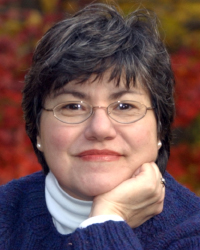
Mary Rosenblum
|
Hello all.
|
|
Welcome to our Professional
Connection live chat interview.
|
|
My guest tonight is Phyllis
Ring, freelancer, Long Ridge instructor, and VERY busy woman!
|
|
Phyllis Ring has loads of experience
in magazine writing, which has been the bread and butter of my freelancing
life since about 1984. She also writes regular columns for UPI (One
Light, Many Lamps, www.religionandspirituality.com
) as well as some other venues. The columns and essays, a big part of her
writing now, connect with two aspects of her work -"inspirational
writing" (at least that's what others seem to be calling it). And
also, the columns have paved the way for a published collection, Life at
First Sight, which is with a publisher now and will hopefully be coming out
within the year
|
|
She is also immersed in another
book project that involves gathering stories from those who experienced
segregation and the challenges of desegregation during the Civil-Rights
era, before those stories are lost fever. And - many-pots-on-the-stove
writer that she tends to be - she is still working on a book with her
Montessori-teacher daughter about how to maximize children's opportunities
for spiritual transformation and growth.
|
|
All this, and she has time for
Long Ridge students, too!
|
|
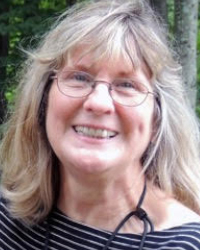
Phyllis Ring
|
Hi everybody!
|
|
Mary Rosenblum
|
So, Phyllis, welcome! It's so
nice to have you here!
|
|
Phyllis Ring
|
Hi everyone! Glad you're all
here. :-)
|
|
Mary Rosenblum
|
Let's start from the very
beginning...how did YOU get started writing? And when?
|
|
Phyllis Ring
|
Too much time alone in my room
as a child!
|
|
Though as an adult my formal
training was for other things, I had written from about the time I got
hooked on reading in grade school. Then I had felt affirmed as a writer
when the local newspaper asked me to be a correspondent for my high school.
But most of my own personal writing efforts were ones I kept to myself.
|
|
In my mid 20s, already married
with two small children, I began to take seriously what I had always done
anyhow. A friend started a small magazine called Spiritual Mothering and
asked me to be a contributor.
|
|
To my surprise, she seemed to
really value my contributions. Her response helped shift the way that I
began to see writing as an inevitable part of my life.
|
|
I became a writer because I
accepted that it was an essential part of who I am. Then I went and found
out everything I possibly could about it, and kept doing that as I actually
practiced it.
|
|
I stated out trying to write
fiction, which I still pursue some. But it quickly became obvious that if I
wanted to generate income from writing in an ongoing way, nonfiction was
the route. And the more diversified I could be, the better.
|
|
Mary Rosenblum
|
Very cool! So how did you get
started in nonfiction? With your friend's magazine?
|
|
Phyllis Ring
|
Pretty much. The I made a
connection with my local newspaper group, and with some regional magazines
that were starting up in my area.
|
|
sailor
|
Some fiction writers in my
writers group seem to look down on nonfiction writers as if we have it easy
and are less creative. Granted the market is better for nonfiction, but I
think writing creative nonfiction is every bit as creative and challenging
as fiction.
|
|
Mary Rosenblum
|
You've done both. What do you
think of this attitude:
|
|
Phyllis Ring
|
Oh, man, trying to write well
is always a challenge, no matter kind of writing it is. Creative nonfiction
is just as challenging as fiction, I think, because they share so many of
the same elements, in a way.
|
|
race
|
How do you write for a magazine
if you're not an expert on anything?
|
|
Phyllis Ring
|
Hi race. That's the best part
of magazine nonfiction writing, for me. As long as you build your skills,
you go out an learn everything you can about the topic on your readers'
behalf, then share it as effectively as you can. Also, you talk to expert
sources who provide expert input.
|
|
Mary Rosenblum
|
That's really the key, isn't
it? Finding the experts who can provide the expertise?
|
|
Phyllis Ring
|
It definitely is an important
part of the mix. That, and doing research, which is so much easier online
now, with so very much more info. accessible.
|
|
Mary Rosenblum
|
I have quite a few students who
are hoping for a serious career in nonfiction. Can you share with us the
route you took to building your career? Where did you start? How did you
decide on those early markets? What sorts of magazines did you
query...little ones or large ones?
|
|
Phyllis Ring
|
Once I connected with working
for newspapers, which I did fairly early in my career my writing efforts
developed in whole new directions.
|
|
Working for a newspaper really
proved foundational in my development as a writer. In the early 1990s, I
began writing feature articles for my local newspaper group. Those regular
opportunities and deadlines helped to build my skills and confidence.
|
|
Then, when the paper needed a
copy editor to train, I was very lucky to receive that opportunity. From
there, I eventually progressed on to become both their features editor and
also do as much writing for them as I had time for.
|
|
As features editor, I had a
lot of writing opportunities built in to the job, of course. Not being a
news reporter, but the kind of feature writing that always really attracts
me most.
|
|
What great work. If you are
like me and love learning, you get to go out and learn all you can about
something so that you can help others learn about it. That is what I really
loved about feature writing. Plus, you can more readily find markets for
nonfiction, of course.
|
|
pook
|
Did you work as an employee of
the newspaper or just freelance?
|
|
Phyllis Ring
|
At first, I freelanced and did
2-6 feature stories a month. After six months, they offered me a part time
staff position, and eventually I worked full time for them as features
editor. And I still did a lot of writing for them, too.
|
|
sailor
|
I've heard that newspapers pay
freelancers very little. True?
|
|
Phyllis Ring
|
Thanks for another good
question, sailor. It's true that most pay on the lower end of the scale,
but some writers make up for that by learning how to handle lots of
assignments efficiently. Plus, I often could resell the stories I wrote.
|
|
Mary Rosenblum
|
Ah, that brings up a
question...I've often heard that many newspapers buy all rights because the
pieces are syndicated. Not for features?
|
|
Phyllis Ring
|
Not usually for more locally
based features, no It's often the staffers who are bounds by demands like
that, I think.
|
|
gail
|
What Rights do newspapers
usually buy from freelancers?
|
|
Phyllis Ring
|
Most that I have dealt with
expect one-time rights. Some occasionally ask for first rights, but that
was rare, in my experience. They usually just want it when they need it, to
fill the holes, and they didn't seem to care as much about rights at all.
|
|
sailor
|
Were you able to sell the
features you wrote to multiple newspaper groups? Kind of like
self-syndication.
|
|
Phyllis Ring
|
No, I haven't pursued that
route. While working for the newspaper, I was simultaneously freelancing
for magazines every chance I got. I was looking at every piece I wrote to
see how it might work for magazines sales, although only a percentage of them
did. But this was where I got practice and training in how to look t my
work with an eye to selling it more than once.
|
|
Mary Rosenblum
|
Killing two birds with one
stone! Clever girl! What a great way to break in...with a regular paycheck,
but your day job feeds your freelance career.
|
|
Phyllis Ring
|
In 2000, I took the plunge and
shifted to freelancing full time, making most of my income from magazine
assignments.
|
|
I think part of the success I
was lucky enough to have was because I was always looking to maximize sales
from the same manuscript, or the work involved in creating it. And to find
the kind of ideas that could generate more sales.
|
|
There was one piece that
really launched my efforts, a story about a fascinating African American
history project in my region
|
|
Everybody was looking for those
kinds of stories but nobody seemed to be writing them. I managed to find 13
different markets for it. Certainly wasn’t an unlucky number for me!
|
|
Mary Rosenblum
|
Ah, this is a line that I
preach to my students all the time....
|
|
can you elaborate a bit about
just how to do this in general?
|
|
Maximizing your sales from one
pool of information, I mean.
|
|
Phyllis Ring
|
Well, I kind of got addicted
to it at one point! Even as I'm conceptualizing an idea, I'm making a list
of prospective markets for it, if I take a different slant. Or even
sometimes resell it just as is.
|
|
I always want to make my work
and efforts produce the most they can.
|
|
When I take an assignment now,
it's usually because I know that I’ll be able to use what I generate, or at
least a part of it, more than once.
|
|
Mary Rosenblum
|
Oooh, here's a chance to define
'slant' ! Could you help folks out here?
|
|
I think it confuses a lot of
students.
|
|
Phyllis Ring
|
I'll do my best. This is the
focus that a piece takes .Take that topic I managed to resell 12 or more
times. In some pieces I focused on the project.
|
|
For others, it became a
profile of the woman whose work and research made it possible.
|
|
Other stories wrote about the
city where it's located, as a travel destination.
|
|
Phyllis Ring
|
And the very best sale, the
one I made to Ms., packed everything about the topic I could into just 300
words!
|
|
Mary Rosenblum
|
Wow, very nice clip there!
|
|
Phyllis Ring
|
Yup, It was my first
"biggie" :-)
|
|
jrp
|
How do you find the right market
place?
|
|
Phyllis Ring
|
I was also absolutely
relentless about learning everything I could about the widest possible
array of magazine markets. I was a regular hunter that way, and learned to
enjoy the hunt, too, That helped a lot.
|
|
I continue to do this. I
subscribe to a bunch of online newsletters and market lists, and I imbibe
them regularly, always looking for new markets I hadn't yet found.
|
|
When folks have a hobby or
interest, they pore over info. about it. That's the way I've always treated
my market research.
|
|
Did I answer your question,
JRP?
|
|
Mary Rosenblum
|
Jrp, who asked this last
question said, for example, that he writes about West Virginia. Where could
he find markets that take pieces like that?
|
|
jrp
|
The only possible publication I
found is Country Woman
|
|
Phyllis Ring
|
Regional magazines, for one.
But depending on the focus, there might be other magazine categories that
would be worth investigating, too.
|
|
Country Woman might be good.
With any publication, it's so important, as you no doubt know, to immerse
yourself in looking at the actual publication, too. Which you can often do
now online.
|
|
That's the only real way to
get a true feel for the magazine's tone, audience, approach,
"voice," etc.
|
|
Mary Rosenblum
|
Oh, let me ditto what you just
said! J
|
|
jrp
|
These are fiction or, at least
fact stranger than fiction.
|
|
Phyllis Ring
|
Whichever type of writing, you
just have to be sure that that is what a publication accepts, of course.
|
|
jerryll
|
Is there a particular topic you
wrote about often?
|
|
Phyllis Ring
|
There are several. Health and
healing, parenting and family life, arts, culture, writing - -and lots of
stuff going on in New England, where I live. I also enjoy working as a
columnist, which I do for several publications.
|
|
And spirituality and personal
development are big interest areas for me, personally.
|
|
My absolutely favorite kind of
writing involves discovering the stories that show what I think is most of
all, the evidence of goodness and spiritual illumination in human lives,
which, of course, can also be somewhat messy or confusing at the same time!
But those glimmerings of that light show up in us and our lives just the
same, and I think we need to watch for them.
|
|
One of my favorite venues for
sharing the essay-style columns I write on themes like this is at the
religionandspirituality.com site hosted by United Press International. I
write a column called One
Light, Many Lamps, which runs there on alternate Tuesdays.
|
|
Mary Rosenblum
|
This is your inspirational
writing, right?
|
|
Phyllis Ring
|
Yes, and it is becoming my
deepest love. I guess it always has been.
|
|
Mary Rosenblum
|
Tell us a bit about this, what
it is, where you publish it?
|
|
Phyllis Ring
|
For me, the broadest and most
meaningful definition of inspirational writing is that it includes a
personal, spiritual perspective that the writer encourages the reader to
consider. The writer draws on personal experience, or that of others, in an
effort to reach the reader emotionally and spiritually.
|
|
In my own experience, the
process of inspirational writing goes something like this. I witness and
observe. Something moves me and resonates with truth, usually in a very new
way. I reflect on the story that seems to carry this truth. Then do my best
to share it simply and effectively.
|
|
My goal in this kind of
writing is that it resonate with the inner life of the reader, be a
catalyst, and not ever seem preachy, or insistent.
|
|
I think of this kind of
writing as genuine reflection, in two ways. There is the kind that goes on
within the writer. And then there is the mirror-like conveying of
something, light, I guess, in an inviting way to others so that they have
their chance to connect with it, too.
|
|
As for markets, it's such a
wide range that is looking for this -- far beyond only religious magazines.
|
|
jerryll
|
Thanks for the insight! It was
very helpful.
|
|
jrp
|
Sounds like you have found your
life's purpose! J
|
|
Phyllis Ring
|
Some of the venues for me have
included Christian Science Monitor, Mamm, Sasee . You're welcome Jerry. J
Yup - -it does seem to be the purpose that draws my heart.
|
|
h.p. lovesauce
|
Are "inspirational"
markets invariably Christian?
|
|
Phyllis Ring
|
You know - -I was going to ask
folks here how you would define "inspirational". I find that this
seems to extend beyond Christian markets now, while also including them.
How do some of you view this type of writing?
|
|
Another goal of mine in this
kind of writing to create something that any reader, regardless of religious
or spiritual inclination, or lack of it, can pick up and hopefully relate
to.
|
|
I am going for a heart
connection, above all, and I trust that the more inspirational elements
will come through from that.
|
|
ginas
|
Anything that gives people
hope...I don't associate it with specific religion.
|
|
Mary Rosenblum
|
I like that definition... That
would include the 'This I Believe;' project. I find that inspirational and
it's hardly religious.
|
|
Phyllis Ring
|
Yes, Gina, that rings very
true for me.
|
|
frightwrite07
|
Human/uplifting and hopeful.
|
|
cajunguy
|
I find Christian is invariably
inspirational, but inspirational doesn't necessarily have to be Christian.
|
|
jrp
|
I think inspirational is also
spiritual.
|
|
ginas
|
I am so happy to have you hear
because this is exactly what I like to write most...Inspirational
|
|
Mary Rosenblum
|
You got quite a response here.
:-)
|
|
Phyllis Ring
|
Frightwrite's suggestion is
among my goals, and cajunguy has suggested an interesting reality. It's
definitely spiritual, in some way, isn't it, jrp? And Gina , I am happy to
be able to share with you about this, too.
|
|
info
|
Don't most mags consider
inspirational, in general, as something that inspires anything? I guess I
look at inspirational as inspiring people towards something specific,
whether it be a religion, craft, music, art or any number of things.
|
|
Phyllis Ring
|
Yes, info, that does seem to
be a key element - -that it evokes a response in the reader, that it
inspires them to see, or feel or even perhaps act differently. Or to
express creatively themselves, in some way.
|
|
pook
|
How do you keep from being
peachy?
|
|
Phyllis Ring
|
GREAT question pook -- more to
come
|
|
By using the same voice I
would use with a friend. By keeping things simple. By making use of all of
the important aspects of story.
|
|
Often, for me, this kind of
writing is much the same approach as crafting a short story, or creative
nonfiction.
|
|
Making use of good dialogue at
the right moment, the kind that rings true. Using pauses and beats.
|
|
In essence, taking the reader
into the journey of the experience, so that he or she can discover for
herself what resonates within it.
|
|
It's the ultimate showing
rather than telling. Also, as I write these kind of pieces, I am often also
surprised, in some way, too.
|
|
When we can be true to the truth
in what we share, it won't ever be preachy, I don't think.
|
|
Mary Rosenblum
|
So what kinds of markets exist
for this sort of piece, Phyllis? Clearly it interests a lot of folk here!
|
|
Phyllis Ring
|
Start looking in the religious
markets section, of course. But I noticed that the Institute market guide's
index listing for personal experience pieces is quite large.
|
|
What I strongly recommend,
what I did, was to start looking in publications themselves for this sort
of writing.
|
|
Another wonderful outlet for
them is anthologies, of course, of the Chicken Soup variety.
|
|
And a personal favorite market
that has bought a number of my pieces is Christian Science Monitor, for it
Home Forum section.
|
|
CSM posts good guidelines on
its web site - -read them carefully. Since it publishes so many days a
week, it needs 5-6 pieces a week, at least.
|
|
Mary Rosenblum
|
And they have a HUGE
circulation.
|
|
Phyllis Ring
|
That they do -- and
international! They are very nice folks to work with, too.
|
|
But be sure to check their
guidelines --for the Home Forum essay, and follow them very exactly should
you submit.
|
|
Mary Rosenblum
|
I'll be sure to feature the
CSM's Home Forum as a market in the Newsletter.
|
|
Phyllis Ring
|
Well worth doing.
|
|
cajunguy
|
Can't remember specifics, but I
found a Christian writer's market book at a local library.
|
|
Mary Rosenblum
|
Christian Writers Market. I
recommend it to a lot of students.
|
|
Here's a nice take on
inspirational writing, Phyllis:
|
|
lzablockij
|
I think we write to encourage
people and provide hope.
|
|
Phyllis Ring
|
Another good one I just
reached for here is Sally Stuart's Christian Writers Market Guide??
|
|
Yes -- so true that that is
why we write!
|
|
One of my favorite sayings is,
"The most important of all pilgrimages is to relieve the sorrow-laden
heart."
|
|
I just returned from one as a
matter of fact.
|
|
Mary Rosenblum
|
Very cool. Who said that,
Phyllis?
|
|
Phyllis Ring
|
Someone named 'Abdu'l-Baha,
who was a religious prisoner from the age of 9 until he was 60. He
certainly knew how sorrowful hearts can get.
|
|
Mary Rosenblum
|
Ah! Him, I have heard of.
|
|
Phyllis Ring
|
I bet he's heard of you, too.
;-)
|
|
Mary Rosenblum
|
You never know.
|
|
pook
|
Do you always have to query
first?
|
|
Phyllis Ring
|
Hi again, pook. It depends on
what sort of writing you plan to submit.
|
|
Some publications are happy to
receive the full manuscript for nonfiction. Most don't need a query for
fiction.
|
|
But because so many editors
are so busy, most would rather see a query letter for nonfiction first.
|
|
And copper -- thanks for the
greeting! I just got back from Israel, where I got in the habit of saying
"Shalom" :-)
|
|
Any more thoughts we should
explore about queries?
|
|
Mary Rosenblum
|
It's probably best to simply
read the submission guidelines, right? That should tell you whether a query
is needed or not, right?
|
|
Phyllis Ring
|
Absolutely right. And if those
don't tell you, it's Ok to inquire politely and ask what they prefer.
|
|
jerryll
|
Off the top of your head, do you
where I might look for inspiration philosophy?
|
|
I mean, where I might look for a
market.
|
|
Mary Rosenblum
|
Where do people look for
markets. You mentioned online lists, right?
|
|
Bookstores?
|
|
Phyllis Ring
|
For inspirational writing
,jerry? That book of Sally Stuart's is great for more religiously oriented
writing.
|
|
And yes, online lists, from
online newsletters and web sites are a good source.
|
|
But for inspirational writing
that isn't strictly religious, it's worth looking through most of the
categories in a markets guide,
|
|
Because the range is so wide
for these sorts of essay-like pieces. Especially if they're personal-experience,
or personal reflection.
|
|
All sorts of niche type
markets take them, as well as more general ones.
|
|
copper
|
So would we google
"inspirational writing" to come up with the lists of publications
online?
|
|
Phyllis Ring
|
Yes, copper, that could work.
(Though when we google these days, what can come up first is so often
something trying to sell us something!
|
|
Mary Rosenblum
|
You know, what it will often do
is to bring up a list of pieces that have been published...and then you can
see where they were published and look up the magazine.
|
|
Phyllis Ring
|
GREAT point, Mary.
|
|
Mary Rosenblum
|
Backtracking!
|
|
Phyllis Ring
|
As I read many of those online
newsletters, so many of the market listings these days are looking for this
kind of work. People are increasingly hungry for it, I think.
|
|
cathie
|
Any suggestions for getting
inspirational messages into unexpected places?
|
|
Phyllis Ring
|
Ooooh, cool question, cathie.
|
|
I think that if the writing is
authentic, and relates to topics that the publication seeks to include or
cover, then an inspirational message in a well-crafted and cogent piece
that fits their guidelines can hit home.
|
|
Any unexpected places you have
in mind?
|
|
cathie
|
I was hoping you would
suggest...
|
|
Mary Rosenblum
|
Phyllis, if say, the piece is
finding inspiration in gardening, say, wouldn't it be worth sending it as a
nonfiction narrative to say, gardening mags that take NF narrative?
|
|
Phyllis Ring
|
What sort of topic or focus do
you have in mind, Cathie? And yes, Mary, that seems an excellent of a
viable approach.
|
|
cathie
|
I didn't have any one in
particular, it's more a case of enlightening people without being obvious
or where expected.
|
|
Phyllis Ring
|
What I've found is, the
greater percentage of publications run pieces with some sort of reflective
or inspiring message - -often as the very last page, if not a department,
is in the front somewhere,
|
|
Yes cathie, I hear what you're
saying now.
|
|
It seems that you’re talking
about a very subtle approach -- one truly woven in and not just attached
somewhere. That's what most editors want form most types of writing, I
think.
|
|
sailor
|
A little while ago you said,
"When I take an assignment now.." That sounds like you're at the
level where editors contact you instead of you querying them. If so, how
often does that happen to you? I can only dream of such things.
|
|
Phyllis Ring
|
Dream away! It can happen.
It's really a process of honing your work, which we're all always dong
anyhow, then getting savvy about editors' needs.
|
|
I was lucky that my sheer
perseverance, sending out as many submissions and queries as I could,
hopefully well targeted, probably netted me publication fairly early.
|
|
Early in my efforts, I heard
one writer talk about how, if you have some ability, increasing your number
of submissions and queries really improves your odds definitely made a deep
impression on me. I love that contest that you sponsor to encourage that,
Mary. What a great idea.
|
|
Newspaper work also helped me
acquire an editor’s perspective too, of course. It became obvious that
editors need for writers to be skilled, dependable, to come through on
deadline and do good work. Also, to be accessible, yet unobtrusive. And,
ideally, to bring them with more good ideas to follow up.
|
|
|
Once you've proven yourself
with an editor, if you can come back with another good idea, and they
eventually start giving ideas to you.
|
|
Editors are just people who
need to get their job done. Writers can be their awfully good friends, in
that way.
|
|
Editors almost always have a
need for writing, but it needs to truly match the needs that they have. Too
often, writers are not making enough effort to do that.
|
|
More than once, I’ve asked for
time with an editor in my region, either in person, online, or phone, to
explore what her/his needs from writers look like. If they know you’re
serious, they often appreciate that. It can sometimes lead to assignments,
too.
|
|
Also, when I query, I often
say something at the end like, "If this idea doesn't hit the mark but
you're looking to make assignments, thank you for keeping me in mind."
The list of clips I reference shows them I have a track record.
|
|
pook
|
How much time weekly do you
spend on these many projects, like for one column?
|
|
Phyllis Ring
|
Writing columns is my true
love. I am always writing them, really, as I go, wherever I am.
|
|
These are my treat to myself,
in a way. But when it comes to actually getting one written and sent, it
can take an hour, it can take an afternoon, it can unfold over several
days.
|
|
As Joyce Maynard says, when it
comes to writing out of your own view and experience, "I often have to
live the column, first." Or see it in the first place, in life around
me.
|
|
molli
|
Can you describe your typical
work day?
|
|
Phyllis Ring
|
Oh, molli, if only I had a
typical one! But let me try.
|
|
I work best early in the day,
VERY early, so I try to start by 6 at the latest, or maybe 7.
|
|
I devote that time to writing
that's springing forth for the first time, as I like it to come so freshly
out of dream time.
|
|
I usually work on writing
assignments, articles and such, from around 9-1, maybe a little later. Then
I need to do something non-writing.
|
|
My favorite time to look at
the lessons of Long Ridge students is either late morning or early
afternoon, too. That's a good focus time for me.
|
|
Good time of day for revision,
too, or doing some of the freelance reading or editing that I do.
|
|
The columns seem to come out
best in the morning, right after that dreamier creating time.
|
|
cathie
|
Given the amount of time you
write - what percentage goes to market research?
|
|
Phyllis Ring
|
It's a little hard to tell
cause I'm always doing it as I go. I read all of those newsletters' market
listings at least every week -- that's about a half hour.
|
|
Then I probably spend an hour
or two a week scouting around to look at actual pubs (often online) and
read their guidelines.
|
|
So it's actually a small
portion if I work a, say 30- to 40-hour week, but it's steady and ongoing.
|
|
Plus, I've been doing it for a
fairly long time, so am familiar with a fair number of markets. But you still
have to keep up -- the rules always change!
|
|
copper
|
Can you be specific about the
"newsletter market listings" How do we find those?
|
|
Phyllis Ring
|
Sure. There are a bunch of web
sites for writers, such as Writers Weekly, Worldwide Freelancer -- and my
favorites, the publications put out by hope Clark (Funds for Writers etc.)
|
|
Mary Rosenblum
|
And be sure to check the
Webeditor section of the LR Newsletter. I often post new market lists I've
found online.
|
|
Phyllis Ring
|
Most of these publish a free
weekly e-newsletter that includes up-to-date market listings, many with
live links to guidelines and such.
|
|
If you subscribe to even one
or two, you'll learn about many others just by reading them. I have a list
of these electronic pubs that I send to students. Email me at
info@phyllisring.com and I'll send it to anyone interested.
|
|
Mary Rosenblum
|
Ooooh, send me the list,
Phyllis and I'll include it in the newsletter!
|
|
cathie
|
What is freelance reading?
|
|
Phyllis Ring
|
Yup - -LR is at the top of
that list I send out -- should have said so! I'll send it, Mary.
|
|
That probably sounded
confusing. Because I have experience as an editor as well as writer, some
publisher have asked me to take a look at projects in different stages of
development, in order to offer feedback.
|
|
I don't actually edit these,
just offer a candid response. It's also a moderate source of some freelance
income.
|
|
belledove
|
I would like to know what you
think is the most important qualification or tool you can have to be an In
Demand freelance writer for a newspaper
|
|
Phyllis Ring
|
Hm, belledove. Good writing
skills and the ability to work well with deadlines.
|
|
Skill in conceiving ideas, and
conducting interviews,
|
|
And, as with any writing,
being able to conceptualize how a piece should come together in order to
feel whole, and invite the reader in.
|
|
Mary Rosenblum
|
We are about out of time and I
know it's late in your time zone...want to tell everyone what we can read
of yours?
|
|
Phyllis Ring
|
Happy to. About 40 of my
published inspirational pieces have been gathered together into a
collection called Life at First Sight, which is currently with a publisher
and hopefully coming out within the year, as you noted.
|
|
And please do check out my
column at religionandspirituality.com.
If you go to that home page and then click the tab for columnists at the
top, you can find me there. A new column goes up every other Tuesday.
|
|
And, I'll close with my
mantra, summed up in what my dear Chinese friends always called out to me
as we went our separate ways. Someday, I’ll figure out how to use it as a
book title.
|
|
Take Your Time! Do Your Best!
Enjoy Yourself! God bless you all!
|
|
Mary Rosenblum
|
God bless you, too, Phyllis!
|
|
Phyllis Ring
|
Goodnight all!
|
|
Mary Rosenblum
|
Thanks for a wonderful and
informative visit! You were great!
|
|
ginas
|
Thanks Phyllis....this was very
interesting
|
|
molli
|
Thank You, Phyllis.. you are
inspiring!
|
|
Phyllis Ring
|
It was sheer delight -- thanks
to each and every one, and all those good questions! BIG WAVE!!!
|
|
Mary Rosenblum
|
Good night all!
|