





























Transcripts

"Creative Journaling" with Valerie Harms

Thursday, July 13, 2000

MODERATOR is Kristi Holl, web editor of this site and author of 23 books for children and teens, plus l00+ articles for adults and children. Kristi also taught writing courses for fifteen years.

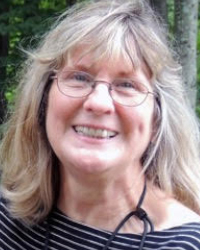
Valerie is Valerie Harms, author of eight distinguished books in various genres. Also, for over 20 years, she has taught the Intensive Journal method, a psychological self-help tool developed by Ira Progoff, in leading cultural centers and universities.

Names in blue are viewers who had questions.

Interviews in the Professional Connection room begin at 9 Atlantic/Canada, 8 Eastern, 7 Central, 6 Mountain, and 5 Pacific.

MODERATOR: Good evening, everyone! Welcome to the new Long Ridge Writers Group Professional Connection room. Tonight we'll hear Valerie Harms discuss a subject she has extensive experience with: "creative journaling." Author of eight books, Valerie has taught the Intensive Journal method for over 20 years. Tonight we'll learn how intensive journaling can unearth hidden writing potential. Welcome, Valerie!

Valerie Harms: Hello, everyone.

MODERATOR: Valerie, you're the author of eight books in varying genres. Could you tell our viewers how you got started writing?

Valerie Harms: I've always wanted to write since I was a little girl. I don't know really where the desire came from. In college I had good teachers. I remember one woman who wore purple fingernails and she strongly emphasized using your senses and knowing your world. That made a big impact. My first real book though came when I was part of a women's consciousness raising group. At this point I had not had a book published and the women urged me to do a book on the group! With their support I was able to do UNMASKING: l0 WOMEN IN METAMORPHOSIS.

MODERATOR: Were you always able to write full-time, or did you also have a day job and/or family to care for?

Valerie Harms: I have always had to juggle raising two children and part-time jobs. Now my typical writing day now is to write in the morning and then handle my other teaching work in the afternoon.

MODERATOR: For over 20 years, you've taught the Intensive Journal method. Please explain what that is.

Valerie Harms: The Intensive Journal method was developed by a psychotherapist and teacher of the lives of creative persons called Ira Progoff as a tool for people to use on their own to bring potentials and integrating awarenesses to the surface. It's nonjudgmental and self-balancing, but anyone can bring their own life beliefs and doubts to it. It's a safe laboratory for inner work.

MODERATOR: Where have you taught this method of journaling?

Valerie Harms: I've taught this method in New York City, CT, CA, Montana, and more. Always at centers of growth and university settings.

MODERATOR: How does Intensive Journal-ing differ from regular journaling?

Valerie Harms: In regular journals you write what you already know. The Intensive Journal has a structure to get at what you DON'T know, what lies beneath the surface. Let me describe some of the sections. There's a daily log which most resembles ordinary journal keeping. There are sections for dreams and imagery, a number of sections that work with time, like memory, the stepping stones of your life and roads taken and not taken. Then there are a number of "dialogue" sections with other people, your work, your body, events, society, and inner wisdom figures.

MODERATOR: I know you were honored by the United Nations for your work with journals! Please tell us about that--how did it come about?

Valerie Harms: I was just proposed by a former honoree and somehow the committee decided to include me. The UN had something about honoring women and that's how I got noticed by them.

MODERATOR: Which features of Intensive Journaling are especially useful to writers?

Valerie Harms: The sections I was talking about before... I'd say, the dream log is useful. The dialogue with work is very important because you treat your work as having a life of its own, from the beginning, its development and its end. I'll say more about that in a minute. And the inner wisdom section is important too. It's about dialoguing with mentors like other writers who have long appealed to you. I also think the memory section and the "Roads taken and not taken" are useful. For instance, a person might have written a novel in their twenties and the ideas germinate over the years and as you get older and presumably wiser, you might tackle it again in a very different way. Mark Twain, I know, wrote one of his novels 30 years after he had first started it. He got about halfway through it, and couldn't complete it until he had lived more and knew more and could finish it.

MODERATOR: Do you believe that most writers are "sitting on" untapped writing potential?

Valerie Harms: Yes, I do and I think there are ideas about political issues, various social concerns, health issues, that need to be explored in depth. There are complex and painful experiences that need a way of being opened up and understood better. The Intensive Journal process makes connections and enables you to take further steps instead of being held back by fear and a sense of not knowing what to do. One thing that often bothers me and what probably bothers others: to what extent do you really write what you want to write? Or is this approach what you think is going to please the market? And that can create a lot of problems in getting started. It's vital to get beyond that and to not have the fear of going out on a limb. And this journal process enables your intuition to support you so you don't feel like you're in an unsafe place.

MODERATOR: How do you use it to center yourself and get started?

Valerie Harms: If I have a conflict or am fearful or full of doubts, I set aside time to work in the areas where the problems are, whether that's relationships or work or something to do with my body. And then I use the different exercises to take me through some steps, like writing out everything that's going on at the time, using the dialogue method, and approaching the problem directly as well as indirectly by perhaps using the inner wisdom dialogue. I might do that in an evening, and then a few times per year I spend a couple days going through the process, and do nothing else, like a retreat, and that really orients me well.

MODERATOR: How do you use this type of journaling to recover past experiences? And why would you want to?

Valerie Harms: The past makes very useful material for writers. For instance, our memories help us recollect the events that can be useful in plots or nonfiction and there's also the "steppingstone" technique which is the very short listing of the steppingstones of your life from birth up until now. Each step is really FULL of people, events, decisions. That's how I wrote a book on Elvis Presley--it grew out of my crush on him as a teenager. I also did some biographies: the educator Maria Montessori, Anais Nin. During certain periods of my life they were all-consuming passions. When I started working on the books, I would go back in those periods to really get all the details about how they mattered. I've been doing this journaling for about 20 years, so I've had a lot of experiences using it.

MODERATOR: Do you work with dreams and fantasies? What is their role to the writer?

Valerie Harms: I think images in our daydreams are literally our imagination at play, and dreams are just a deeper form of these images. Characters come, events happen, and all these are unimposed by the ego. They come out of our depths and are more organic. Let's say you're working on an article or a story and instead of using your rational brain to plot it out in a reasoned outline, you leave room for your intuition or the stream of images that lie just beneath the surface. To get access to them, just spend some time with your eyes shut and get back into the atmosphere and seeing what images come up and ideas. The unconscious is a very rich source of material. It can help the direction of your story or article. Anybody can do this. It's like we all have this stream of images that is going on all the time, like a river flowing, and all we have to do is drop down and dip a cup into it now and then.

MODERATOR: You mention using a "dialogue technique." First, please explain what that is.

Valerie Harms: The dialogue technique in relating to work is seeing it as having a life of its own, not just a product of your imagination. For instance, your work begins with an idea that started from something. Maybe you heard a lecture or read something in the newspaper and something clicked that you could use this idea! And that's the birth of it. And then it has a middle stage, as it grows, and an ending stage. Just like a child that's born, you have a vision of it, but you really don't know what it's going to look like or become. So you dialogue with the work itself to stay in touch with what it wants, how it wants to grow, and what it wants from you to make that happen, as a good parent.

MODERATOR: How can we use this dialogue technique to increase character depth?

Valerie Harms: Wouldn't it be fantastic if you knew your characters' lives from beginning to end, just like you know your own, like their childhood, what their hopes and fears were, what direction their life took? So when you set up a dialogue with say, a character, you would do first the steppingstones of their life very briefly...which gives you continuity. And then you could actually dialogue with the character to find out some things that you don't understand about them. Such as you might ask your character about motive--Why are you acting that way? Sometimes you are writing and you get to a point where things just feel wrong and you don't know where to go next. That's a good point to pick up the journal and explain exactly what the feelings are at that crossroads. So just ask your character questions and let them give you the answers.

MODERATOR: That just fascinates me! How can Intensive Journaling help us develop the work itself?

Valerie Harms: You ask what the work itself wants to become at different stages. Sometimes you might have started an article of story and then for some reason, you haven't worked on it for a long time. I think that happens to all of us frequently. And you need to get back in touch with it and sometimes when there have been dormant periods, the creative unconscious has been at work, developing certain ideas that it can bring up. And I think everybody has the experience of having an idea or a vision of what the work will be once you start to write it, but all sorts of problems develop because it isn't the same as the original vision. And sometimes I know this can be frustrating and make us angry, but it's part of the growth process.

MODERATOR: You mentioned that all aspects of love relationships can fuel creativity. How can love and loss actually feed your creativity? In my own experience, losses nearly wiped my creativity out!

Valerie Harms: First of all, you use that energy, whether it's sadness or excitement--to write. Nothing opens the heart like love, unless we close it down or become numb. You can write with more feeling and passion. Also I think certain writers attract us because of their qualities that we want too! So if we can dialogue with them, we somehow integrate their style, as well as some of the choices they made in their life. For instance, I know the artist Georgia O'Keefe, was very important to me. She's not a writer, of course, but her imagery and focus have appealed to me a lot. And many writers have--I have sections in my journal regarding other writers who have moved me, whose style I'd admire--I like to use their techniques, etc. I see which ones have lived alone, which ones have survived with families. I have explored a lot about love and creativity in many kinds of relationships in my book THE INNER LOVER.

MODERATOR: Are there books about journaling that you recommend? Or web sites?

Valerie Harms: Ira Progoff has written a number of books, but the one that describes these techniques is a book called AT A JOURNAL WORKSHOP. But better than reading the book is to go to the workshop so that you give enough time for the progressive deepening to take place. Their web site is www.intensivejournal.org. There would be a list of the tapes, books and workshops you could attend listed there.

MODERATOR: Could you give us any specific examples in your own writing that resulted from the journal work?

Valerie Harms: In the INNER LOVER book, I went into a lot of the relationships I had with men over the years, and I went back to the Journal sections on them that I had and was able to get the feelings and thoughts that I wrote down "in the moment" at that time. So it was a very alive way of getting material. Then I'm currently writing a book on animals, and I collected all my dreams about animals so that they'll be used in the book too--maybe!

MODERATOR: Often writers say they just don't have time to journal--they need to be doing "real" writing. How would you answer that?

Valerie Harms: I would say you should do "real writing" but also use these techniques to get more depth and wisdom. I think you write better if you have a richer emotional life and experience, and can draw on that. And the force of your character comes through in your writing. I think that all of us are concerned about voice. Voice is that indefinable something that comes out of who you are as a person; it's not something that can be faked. I think doing deep work on your self with these journals enables you to have a wider range of expression.

MODERATOR: What if you can't think of anything to journal about? Do you use journaling exercises as springboards to get you writing?

Valerie Harms: From time to time you can just sit down and start at the beginning of the Intensive Journal sequence. You don't have to have something specific to write about. Many people will just begin by opening their journals and begin with one of the sections in the book, and take it from there. One thing leads to another. There are built-in leads that come from your material. For example, a dream might lead you to certain characters or events in your life, and those are the springboards you use to continue journal exploring. And then out of these journal sessions would come ideas you can use in your work.

MODERATOR: Why do people resist journaling sometimes? Are there common "journaling blocks" when journaling?

Valerie Harms: I think sometimes we just get bored writing about what has happened to us, what we already know. But it's exciting to get deeper into your life and more connected to it and see where it wants to go. We're all concerned with ourselves and a lot of the time in our daily existence we have to do so many chores and be so many things that we are living on the surface, so taking the time to do this deep journal work has a way of connecting you to your core self, and I have found that I might start journaling exhausted, but I soon get very energized because my attention is focused on this beam called "Valerie."

Ducky: How does journaling actually help you write?

Valerie Harms: It does in a number of ways. First of all, overall, it gives me more ideas and makes connections I wouldn't have made with my plain ordinary thoughts. Then it enables me to mine my past for interesting material. Then I use those dialogue techniques to work out various pauses, doubts, frustrations, and so on. I use every single section because it's a way of keeping one's creativity moving. Ira Progoff taught the lives of creative persons at the university level and he wanted to see what they had in common. He found that they were people who could keep their lives in motion, that they didn't get stuck, and so he developed this tool to make that happen for anyone. Getting stuck is like being depressed or maybe reaching a dead end.

bernie: I keep a regular journal, and a writer's journal. I do not write the same type of things in each. Do you keep more than one?

Valerie Harms: No, I don't. Actually, maybe I do...I keep an ongoing dialogue with the current work I'm working on, and that's a folder in which I keep my thoughts and ideas about times I've "talked to the work" and the ideas in which I've gotten for that. Every work has its own section or folder. When I'm working on something (a work in progress) I keep that particular folder very near my desk.

judyg: So basically, you are keeping a personal journal of as many events in your life as you can remember, then going back through your journal to get writing ideas?

Valerie Harms: It's much more than just events. It's dreams and memories and working out the possibilities of various projects. I also have a section that I called my OPUS, which I consider all the things that I do, and the different kinds of things I write. For instance, in my 20s I wrote a couple novels that weren't published, and then I concentrated on nonfiction because I wanted to get published, and I got a lot of experience in nonfiction. But I find that I am thinking about doing another novel; a plot has been developing in my mind, and a lot of what I've been learning in the intervening years will help with that novel. All I can do is refer you to that book AT A JOURNAL WORKSHOP to give you an idea of the scope of this type of journal keeping. It's hard to describe quickly and without you looking at it. The web address again is www.intensivejournal.org where you can find all this. Also there are plenty of other books on journal writing, but they're the 'regular' type of journaling you're all familiar with. It's not bad or anything, but it's not at all like the Intensive Journal method, which covers so much more and takes you so much deeper.

judyg: Could you give an example of the dialogue technique?

Valerie Harms: Sure, let's say in regard to another person, the first thing is to really feel the life of the other person from their point of view, and you do the steppingstones of that person's life from the time they were born to where they are now, and NOT from where YOU see their life, but from their viewpoint--how THEY viewed their life and their conflicts and hardships. Just doing those steppingstones from another person's point of view helps you understand someone else better than you could otherwise. Then, after those two parts, you then dialogue on paper over what you think about them or what the problems might be, or what you'd like to know about them better. Try to have this be a heart-to-heart type of talk, rather than what might happen in person.

Blue Phantom: I've had problems with depression, for good reasons. Is it wise to go back into the past to a not so pleasant time just to get an idea?

Valerie Harms: Absolutely!!! As long as you resist the past you're in bondage to it, and this is exactly why many potentials lie hidden.

Blue Phantom: Does "Intensive Journaling" compete with regular research methods by interjecting personal opinion as fact?

Valerie Harms: No, research should be added to the whole process. I do a lot of research and that's another way--say you read a book on a subject you're working on, and you might want to argue with it! Or write down what the ideas mean to you. It's important to do that kind of in depth exploration, to take the time to work out ideas and see which ones you agree with and want to include.

Oma: Are you saying you make a blueprint of your own life, and then make the same sort of thing happen in your character's life...with different details?

Valerie Harms: No, no, working on my own life is one thing... and a small part of that is working on my writing projects...and characters may be completely made up or partially based on other people, but as I've said, I haven't written a novel in a number of years, and I use Intensive Journaling to do nonfiction. Also stories--there's something about the art and technique of writing that has to be experimented on its own. The journaling work isn't going to teach you how to craft a sentence, but it might tell you what you need to be working on to improve your craft because we all tend to know what needs to be done. Sometimes we have an intuition of what's wrong and journaling can bring that to the surface, and any writer can use it to refine their technique

Kevin: Do you journal at special times or places?

Valerie Harms: No, usually I might set aside an evening during the week, and then periodically do my 2-day retreat as a kind of way to get oriented for the next several months. I clear my calendar for those two days and don't let anything interfere. I might go out by a creek or something but if the wind is blowing my pages it becomes too problematical and I'm better off on my couch where I can tune out the world and be focused on my own imagery. I think it's very important to get into a kind of meditative state because that's where the level of new ideas and insights and awareness can come forward. You can get an idea that will be the seed of something that might take you a year to do or to bring forth. Getting into the meditative state also happens when after my morning's work of writing, I lie down and close my eyes. Often thoughts come that I was too busy to notice while I was working. That' s one simple thing I do. I think Julia Cameron's concept of morning pages is a good way of clearing the surface anxieties, but it doesn't offer what to do next. The Intensive Journal techniques are more developed.

Ducky: Do you journal every day? For how long?

Valerie Harms: No, I don't. I'll be sure to note a dream or note a special thought or event that happens, but I don't feel obliged to do it every day. Progoff's idea was not to make journaling be a duty you HAD to do, but something helpful when you felt like you wanted or needed it.

kmadsen: Are there workshops we can attend? How many days do they typically run?

Valerie Harms: Workshops take place all across the country and usually go from Friday night till Sunday but there are shorter ones too. And I highly recommend one to get started.

Blue Phantom: Can you tell us more about integration? It sounds like you're saying we need to get past the sham that we want everyone to see and get in touch with who we really are. Is that a correct statement?

Valerie Harms: I do think that we need to get in touch with our truths, and know our false masks. But what I meant by integration was more like having ideas join up that take you by surprise. That's happened to me in strange ways. I might start a workshop by feeling a certain thing--complaining about something in my body maybe--and then it will turn out to be connected to some kind of vibrant imagery that emerges from my Inner Wisdom dialogue. I know this sounds hard to understand if you haven't experienced it, but I think that's where this method of journaling really pulls out of you more than you already know. It's really, really surprising.

Ducky: How do we go about this Intensive Journaling?

Valerie Harms: Either get the book we talked about it, or take a workshop as soon as possible, and take it from there. But do get a good introduction to it first.

Kevin: What about hypnosis--is that like your meditation?

Valerie Harms: No.

Wind_writer: Or subconscious or even premonitions?

Valerie Harms: It actually can include both. The whole method is a way of allowing what is in the subconscious to come forward in a safe way. No one is going to go off on a crazy tangent as a result. It has to be balanced. Premonitions are like intuitions, really, and that might be certain people's material to work with. I'd also like to say that our relationships to other people are very good material for all writers. First, the ones you care very intensely about: a parent or a child, a lover, or husband or wife, and the conflicts that we have with them and in understanding our differences and so on, are some of the frequently used material in writing, and just think how the people we love are the ones we tend to know the best, and whether we are angry at them or think we hate them or are passionate about them! And then there is all we have to learn about the relationship itself, and all the places it takes us. This is why working in your journal about some of these people and relationships can help you explore more deeply. Some of it you will use in your life--and some in your writing. When I wrote that book on women, it came about from an opportunity that was completely unexpected. And I learned a lot just in doing it. I learned too what I needed to do better! Especially concerning my own voice. It's very hard for me to be one of these writers like Norman Mailer, whose ego is present on every page in every sentence. And there are plenty of other writers who have very distinctive voices. I have attempted to please others--like editors--and therefore not been as daring as I would have liked to be. And this journal method has been over the years a supportive private workshop that I use to move forward.

Blue Phantom: Do you consider intensive journaling akin to a spiritual experience?

Valerie Harms: Many spiritual experiences occur within it. Working in the different sections will definitely lead you to spiritual experiences, and the best thing about that is that they come about through the organic material of your own life, rather than an institution...and because they start personally, you can be led to a transpersonal experience. Even for devoted Christians or Jews, it also enhances and widens the meaning of various experiences and symbols.

Kevin: How many journals have you filled in 20 years?

Valerie Harms: Actually about l0-l5. They're kept in three-ring notebooks with that kind of paper. Very basic, and that way when I have a whole section, say on my father, I would insert any pages that have to do with my father into that section, or dreams in the dream section, and three-ring binders help you keep them separate. The problem with most journals that all run together chronologically is that it becomes very hard to go back and be able to use what you're written and find it because you can't find the nugget you want. But say you want to write about something that happened concerning your father and go back into that time...you would have access to that very easily with the 3-ring method.

MODERATOR: Closing thought from Valerie before we go...

Valerie Harms: Progroff once said that the Intensive Journal process "is the place where we do the creative shaping of the art work of our life." Our life is an art work--just like the art works that we create--as we go along our paths. And I deeply appreciate everyone's coming tonight! I hope this was helpful!

MODERATOR: Thank you so much, Valerie, for joining us tonight for our first Long Ridge Writers Group interview. I can't wait to get to my journal now!

Valerie Harms: You're very welcome!

MODERATOR: Join us again in two weeks, on July 27, 2000 to hear Taffy Cannon discuss "Writing Today's Mystery." Taffy Cannon is the author of six published novels, five of them mysteries. Guns and Roses launched a new series of travel mysteries featuring Taffy's cop-turned-tour-guide Roxanne Prescott. Taffy's Nan Robinson series involves the protagonist's work as a California State Bar investigator. Come to this live chat to hear Taffy discuss the creation of believable adult heroes and villains, suspenseful plotting--and how and where to sell today's adult mystery.

Also, join me here in the Professional Connection room every Tuesday afternoon for a moderated Open Forum. Your moderator and web editor, Kristi Holl, will be here to chat and answer questions on a variety of subjects. No questions are too simple or easy. Beginning and veteran writers alike are challenged by many of the same things, like finding time and energy to write, juggling family and day jobs, meeting goals, and overcoming various fears. Join me on Tuesdays in the Professional Connection room for an informal session at l p.m. Eastern, noon Central, ll a.m. Mountain, and l0 a.m. Pacific. See you then!

Return to Transcripts


Home | Writing Course | Short Story | Full Story Writing Test 
 
Send Me Full Info | Enroll | Our Instructors | Our CredentialsSample Lesson 
College Credits | Tax Deductibility | From Overseas  | Writer's Bookstore  
Free Writer's News | Life Support for Writers | Chat Room  | Live Forum | Writing Craft
Calendar of Events | Professional Connection | Transcripts | Post a Note | Surviving & Thriving
 
Student Center | Privacy Policy | Web EditorComments | Writing for Children 

LongRidge Writers Group
91 Long Ridge Road, West Redding, Connecticut 06896
Telephone: 1-800-624-1476 ~ Fax: 203-792-8406
Email:
InformationService@LongRidgeWritersGroup.com

Copyright © Writer's Institute, Inc., 2000, 2001, 2002, 2003, 2004, 2005, 2006
No part of the electronic transmission to which this notice is appended may be reproduced or redistributed in any form or manner without the express written permission of Writer's Institute, Inc.